
Mold remediation · Boston, MA
Mold Removal Boston, MA
Mold removal in Boston works when two things happen together: the growth comes out under containment, and the moisture that fed it is stopped. Skip either one and the stain is back by spring. We handle both, in basements, bathrooms, attics and closets across the city.
Call any hour for a no cost estimate. You’ll know what gets cleaned, what gets cut out and what it costs before anyone opens a wall.
- Source firstleak or humidity found
- Containedwork kept to one area
- 10 yearsin Boston buildings
Quick answer
When Is Mold a Job for a Professional?
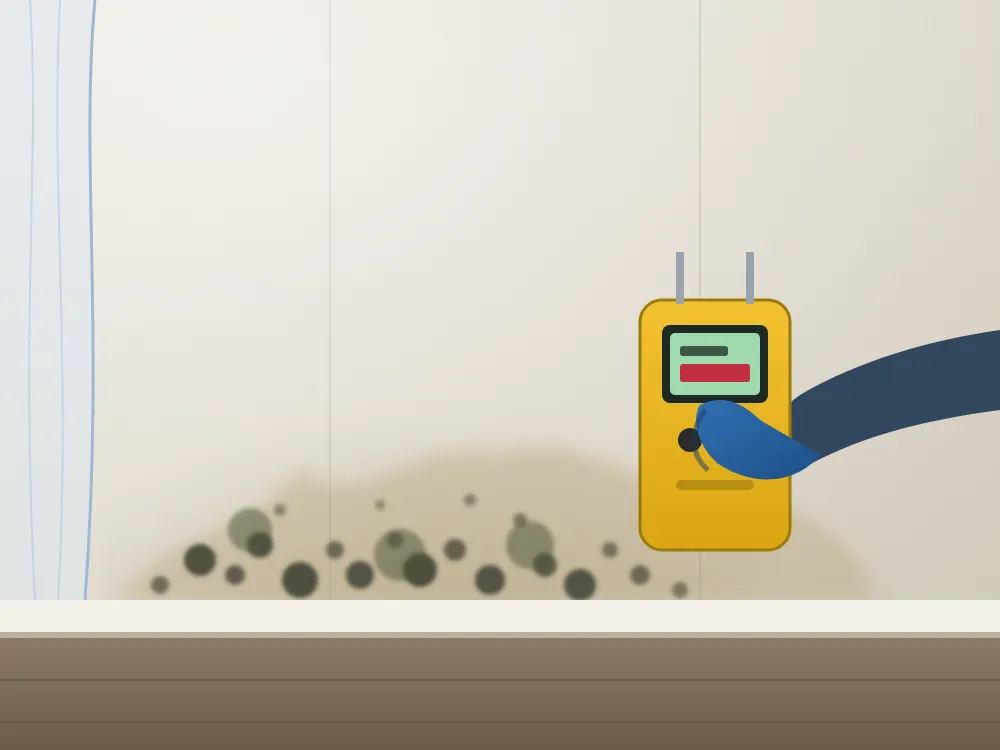
Call us when growth covers more than about 10 square feet, sits on drywall, insulation or carpet, keeps returning, or you smell it and can’t find it. The EPA mold guide for homeowners uses that same 10 square foot line for when a cleanup can usually stay a do it yourself job.
- A small spot on tile or a window sill is often fine to clean yourself once the dampness is fixed.
- Growth after a flood or sewage backup needs professional handling.
- Mold in or near ducts and air handlers should be checked before the system runs.
- A musty smell with nothing visible usually means growth inside a cavity.
Boston buildings
Where Does Mold Grow in Boston Homes?
Almost every mold call we take traces back to one of a few local patterns. The building tells you where to look.
Old basements
Fieldstone and brick foundations let ground moisture through, and humid summers keep lower levels damp. Stored boxes and finished walls give growth something to feed on.
Bathrooms in multifamily houses
Many triple decker and two family bathrooms were built without exhaust fans, so steam settles on ceilings and the cold outer wall.
Attics after ice dams
Meltwater that backs up under shingles soaks roof sheathing and insulation, and bath fans that vent into the attic add more moisture.
Plaster and party walls
Brownstones and rowhouses share masonry walls that stay damp after a leak next door, often behind furniture where no one looks.
Winter windows
Cold single pane or poorly sealed windows collect condensation every morning, and the sills and wall below darken over a season.
After any water loss
Drywall, subfloor and carpet that stayed wet more than a day or two are the most common place for new growth to show up.
How we remove it
Our Mold Remediation Process in Boston
Remediation is planned around the size of the problem. A bathroom ceiling and a full basement both follow these steps, with different amounts of containment and equipment.
Assess and measure
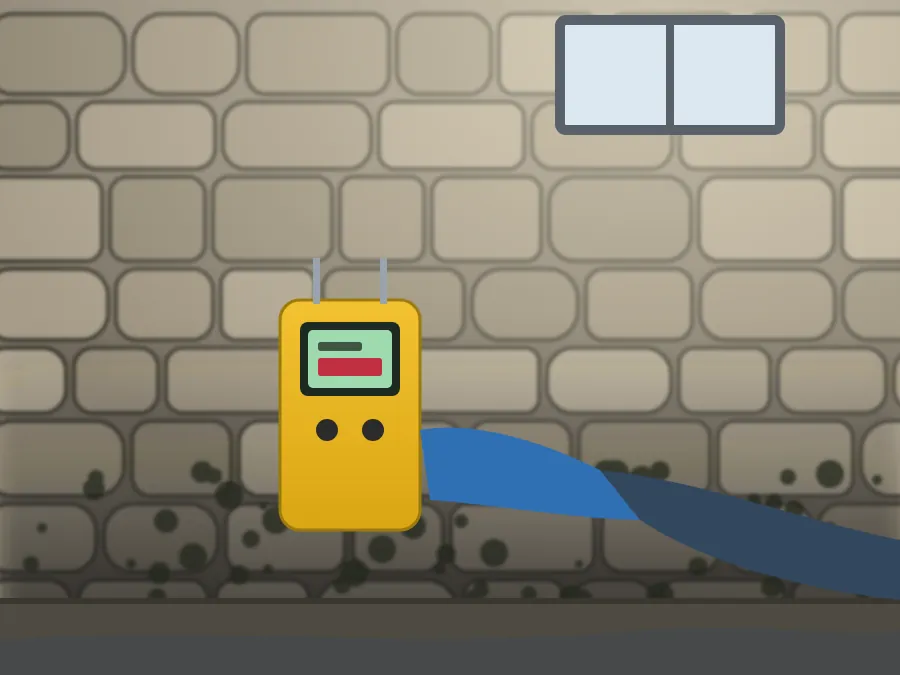
We look at the growth, take moisture readings around it and find what is keeping the area wet.
Contain
Plastic barriers and negative air keep spores and dust inside the work area and out of the rest of the house.
Remove
Drywall, insulation and carpet that hold growth are bagged and taken out. Wood and masonry are cleaned and HEPA vacuumed.
Treat and filter
An EPA registered antimicrobial goes on where it helps, and HEPA air scrubbers run throughout.
Dry and fix the source
The leak is repaired, ventilation is improved or humidity is brought down, and materials are dried to normal readings.
Check and rebuild
We confirm the space looks clean and reads dry before new drywall, paint or flooring goes in.
Mold remediation in Boston, MA
What Affects the Cost of Mold Removal in Boston?
Mold jobs are priced after we see them, because the same stain can be a surface cleanup or a wall that has to come out. You get the number in writing before work begins, with no hidden fees.
| Factor | Why it matters |
|---|---|
| Size of the area | More square footage means more containment, removal and cleaning. |
| Materials involved | Porous materials are removed and replaced; solid ones are usually cleaned in place. |
| Access | A crawl space, attic or finished ceiling takes more setup than an open basement. |
| The moisture source | A plumbing repair, a vent fix or dehumidification may be part of the plan. |
| Rebuilding | New drywall, insulation, paint or flooring after removal. |
Before we arrive
What to Do and What to Avoid
Do
Photograph the growth, stop any active leak you safely can, run a dehumidifier, and keep anyone with asthma or allergies away from the area.
Avoid
Scraping, sanding or dry brushing, pointing fans at the growth, running the HVAC if you suspect the ducts, and using bleach on drywall or wood.
Water and mold together
What If There Is Water and Mold Together?
If water is still present, we dry the structure before remediation, or the growth simply returns. Our water crews handle extraction and drying, and the mold team follows. See water damage restoration in Boston for that side of the job.
Questions
Mold Removal Questions
Should I worry more if the mold is black?
The shade of a colony doesn’t reveal the species or the risk. Any growth large enough to need professional removal gets the same containment and care, whatever it looks like.
Can I just spray bleach on it?
Not on porous materials. Bleach can lighten a stain on drywall or wood while the growth inside remains, and it does nothing about the moisture.
How long does remediation take?
A single small area often takes a day or two. Larger jobs with removal, drying and rebuilding can take a week or more. You get a timeline with the estimate.
Will my insurance cover mold removal?
Sometimes, when the mold resulted from a covered sudden water loss. Mold from long term humidity or slow leaks is usually excluded. We provide documentation either way.
Do I need to leave my home?
Usually not. Containment keeps the work area sealed off, so most families stay home. We’ll tell you if a particular job is an exception.
My basement mold returned after cleaning. Why?
Because the moisture is still there. Seepage, condensation on cold pipes or high summer humidity has to be handled, or new growth follows the cleanup.
Found Mold? Let’s Take a Look.
Describe where it is and how long it has been there. We’ll tell you whether it’s a cleanup you can do or one we should handle.
Water Damage Restoration Boston · 512 Tremont St, Boston, MA 02118 · (857) 675-6821